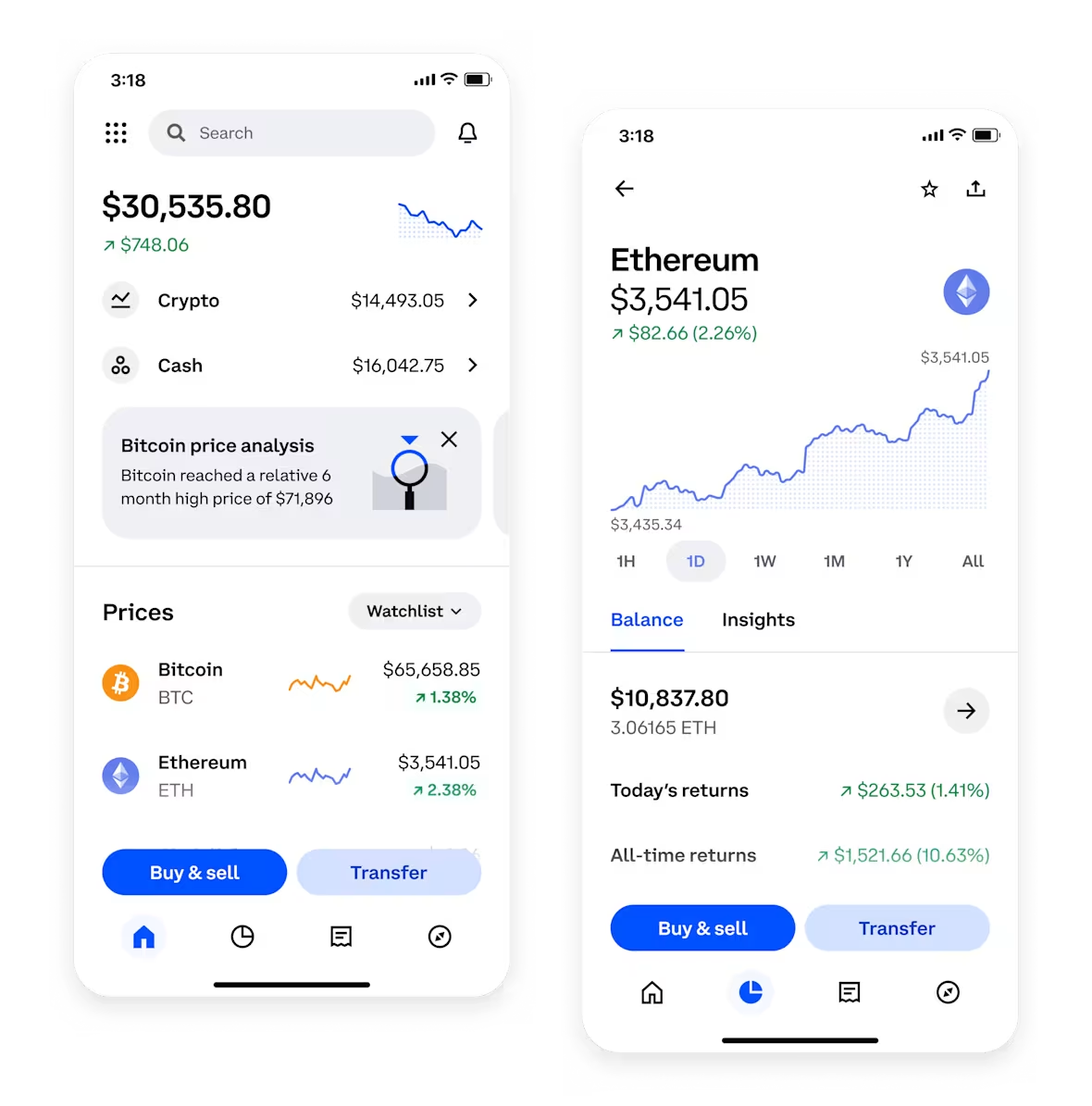

For anyone navigating the cryptocurrency ecosystem, the term "Binance wallet" often surfaces in discussions about security, trading, and decentralized finance (DeFi). While Binance is globally recognized as a leading centralized exchange, its wallet infrastructure is more nuanced than a simple login and password. Understanding the difference between a Binance exchange account wallet and the standalone Binance Web3 Wallet is crucial for both new users and seasoned investors.
First, it is important to distinguish between the wallet embedded within your Binance exchange account and the self-custody Binance Web3 Wallet. Your exchange account wallet is essentially a custodial service managed by Binance. When you deposit Bitcoin or Ethereum here, Binance holds the private keys. This allows for high-speed trading, margin features, and staking products directly on the platform. However, the core principle of cryptocurrency—"not your keys, not your coins"—applies here. For long-term holdings or significant wealth, relying solely on an exchange wallet carries counterparty risk.
This is where the Binance Web3 Wallet fills a critical gap. Launched as a non-custodial alternative, this wallet gives you full control over your private keys. It is integrated directly into the Binance app, offering a seamless bridge between centralized exchange services and the decentralized world. This means you can trade spot on Binance, then instantly move assets to your Web3 Wallet to interact with dApps on chains like Ethereum, BNB Chain, Arbitrum, or Polygon without needing a separate browser extension like MetaMask.
Security is the primary concern for any wallet user. The Binance Web3 Wallet employs Multi-Party Computation (MPC) technology. Instead of a single vulnerable seed phrase, MPC splits your private key into three encrypted parts. You hold two parts (protected by a cloud backup and a personal password), while Binance acts as a recovery service for the third. This eliminates the single point of failure that standard seed phrases represent. You can also pair it with a hardware wallet like Ledger for an extra layer of cold storage security.
The utility of a Binance wallet extends far beyond simple storage. For holders of BNB or BEP-20 tokens, the wallet unlocks access to the BNB Chain ecosystem. Users can stake BNB directly to earn a yield, participate in Launchpool events to farm new tokens, or provide liquidity on PancakeSwap. Furthermore, the wallet supports cross-chain bridging, allowing you to swap native Bitcoin or Ethereum for wrapped versions to use in DeFi protocols. The "Gas Station" feature is another practical addition: if you lack the native token (e.g., ETH for gas on Ethereum), you can use your Binance account balance to pay transaction fees directly.
For users migrating from other wallets, the Binance Web3 Wallet supports importing via seed phrases or private keys. However, it is recommended to create a fresh MPC wallet for the highest level of security. The interface is designed to manage multiple addresses across different blockchains from a single dashboard, simplifying portfolio tracking.
In conclusion, the term "Binance wallet" represents a dual approach to crypto management. For active traders, the exchange wallet offers speed and liquidity. For those seeking self-sovereignty and interaction with the broader Web3 landscape, the Binance Web3 Wallet provides a secure, integrated, and feature-rich gateway. By understanding these components, users can optimize their strategy—keeping trading capital on the exchange for efficiency, while securing long-term assets in a self-custodial environment ready for the next phase of decentralized innovation.